
The Iron Dome: What It Is and How Israel's Missile Defense Shield Works

Amid the escalating violence between the Gaza Strip and Israel, and the extensive deployment of Israeli defensive technology in recent days, many people have sought to better understand one of the world's most advanced and effective missile defense systems: the Iron Dome, Israel's highly sophisticated air defense shield.
Since the early hours of that Saturday morning, the Government of Israel declared a State of War following an unprecedented attack carried out by the Islamist militant group Hamas. Since then, devastating scenes of violence have dominated headlines, keeping the international community focused on the rapidly unfolding conflict.
Against this backdrop, the role of Israel's Iron Dome has drawn worldwide attention. The system's primary mission is to intercept and neutralize incoming rockets launched from the Gaza Strip, protecting civilian populations and critical infrastructure.

The Iron Dome
Israel's primary air defense system, the Iron Dome is widely regarded as one of the most advanced and effective missile defense systems in the world.
Since Monday, more than 2,200 rockets have been launched from the Gaza Strip by Palestinian armed groups toward southern Israel, as well as the metropolitan areas of Jerusalem and Tel Aviv. Military analysts believe one objective of these sustained attacks has been to overwhelm the Iron Dome's defensive capacity, although the system has continued to intercept a significant number of incoming projectiles.
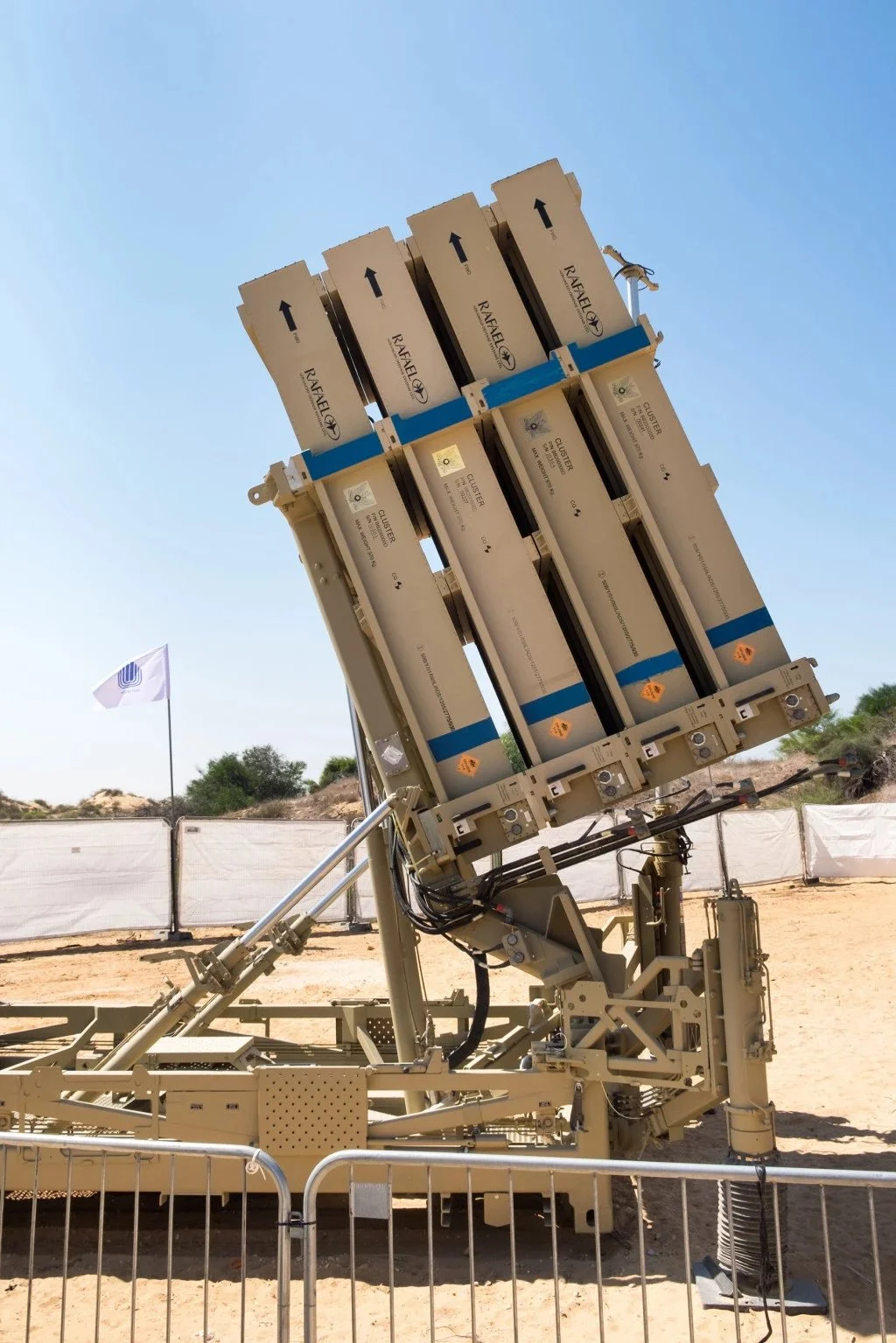
What Is the Iron Dome?
The Iron Dome is Israel's primary air defense shield, designed to protect the country against ballistic missiles, cruise missiles, rockets, artillery shells, and other aerial threats.
The system was developed by Israeli defense technology company Rafael Advanced Defense Systems, headquartered in Israel. Its origins date back to years of strategic planning, largely accelerated by the 2006 conflict between Israel and Hezbollah in Lebanon.
Development officially began in February 2007, with testing completed in July 2010. The system entered operational service in 2011, while its first large-scale combat deployment came during Operation Pillar of Defense in 2012, when Israel engaged Palestinian militant groups, including Hamas.
Although Rafael led the system's original development, the project later received significant financial support from the United States. In 2010, the White House approved US$205 million in funding for the Iron Dome program. In July 2012, President Barack Obama announced an additional US$70 million in assistance. According to official U.S. government reports, by March 2023, the United States had contributed approximately US$3 billion toward Iron Dome batteries, interceptor missiles, co-production costs, and ongoing maintenance.
Although Israel originally developed, owned, and controlled the Iron Dome technology, the United States requested co-ownership of both the technology and its production beginning in 2011.
In 2014, both governments signed a co-production agreement allowing major components of the Iron Dome system to be manufactured in the United States. At the same time, the U.S. Missile Defense Agency (MDA) was granted full access to the proprietary technology developed by Rafael Advanced Defense Systems.

How Does the Iron Dome Work?
The Iron Dome consists of several highly sophisticated systems working together to intercept the vast majority of aerial threats directed toward Israel, often beginning the moment a projectile is launched.
Each battery combines interceptor missiles, advanced radar systems, and highly sensitive command-and-control technology. Using real-time radar tracking, the system calculates the trajectory of incoming projectiles to determine whether they are likely to strike populated areas or fall harmlessly in open terrain. This enables the Iron Dome to automatically decide which threats require interception and which can safely be ignored, maximizing efficiency while conserving interceptor missiles.
Interceptor missiles are launched vertically from both mobile and fixed launch units strategically positioned across Israel.
In addition to intercepting incoming threats, the system is capable of issuing civilian warning alerts up to one minute before a projected impact, giving residents valuable time to seek shelter.
The Iron Dome is designed to protect both deployed military forces and maneuvering units, as well as Forward Operating Bases (FOBs), critical infrastructure, and densely populated urban areas against a wide range of direct and indirect aerial threats.
According to its manufacturer, the Iron Dome has achieved an interception success rate exceeding 90% under operational conditions.
As of 2021, each Iron Dome battery was estimated to cost approximately US$50 million, while every Tamir interceptor missile carried an estimated price tag of at least US$62,000, making the system one of the most technologically advanced—and operationally expensive—air defense networks in the world.